


Understanding Seawater Desalination——Sea Water Reverse Osmosis Membrane
At present, seawater desalination is mainly implemented by two technical routes, namely, the membrane desalination process based on reverse osmosis (RO) and the thermal desalination process based on Multistage Flashing System (MSF) and Multiple Effect Distillation (MED):
1. Reverse osmosis (RO): The use of reverse osmosis membrane, under the action of high pressure, through the screening effect of membrane aperture, the salt and impurities in seawater are separated to obtain fresh water.
2. Multi-stage flash evaporation: the seawater is flash under different pressures, and the water vapor and liquid water are separated by controlling the change of pressure to achieve the purpose of removing salt.
3. Multi-effect evaporation: The use of multi-stage evaporator, the seawater gradually heated evaporation, each stage of the evaporator uses the steam in the previous stage of the evaporator to heat, thereby saving energy.
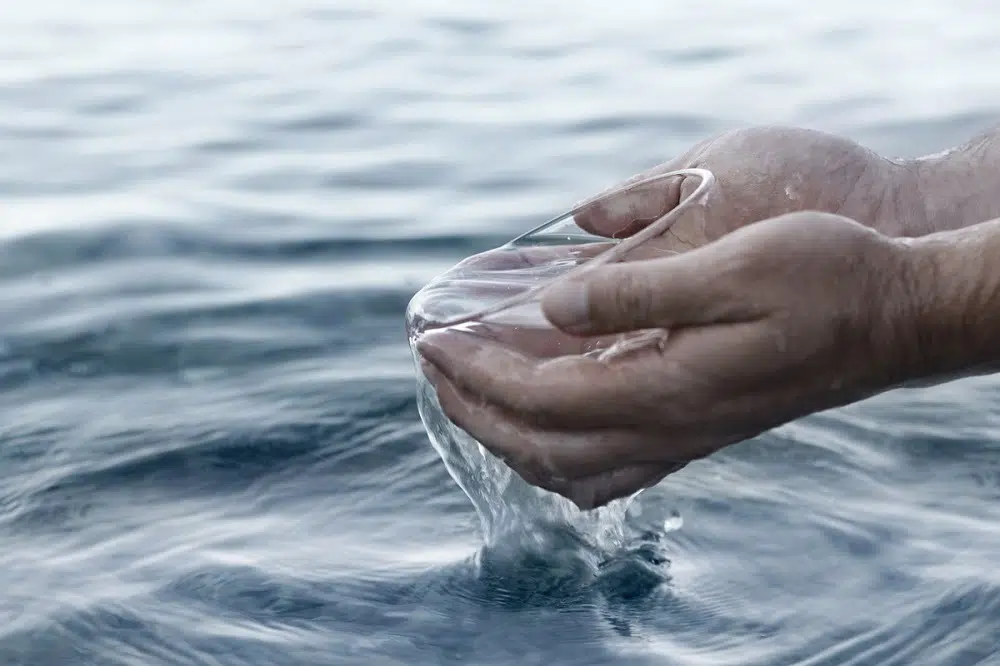
Reverse osmosis (RO) technology is widely used in desalination plants. Reverse osmosis membrane is a special membrane filtration technology, by applying high pressure to seawater by forcing the membrane, so as to separate salt, microorganisms, organic matter and other impurities, to obtain fresh water.
The reasons why reverse osmosis technology is widely used in desalination plants include:
1. Efficient performance: The reverse osmosis membrane has high salt impedance and high flux, which can effectively remove salt and impurities in seawater and obtain high-quality fresh water.
2. Energy saving: Compared with traditional desalination methods such as pyrolysis distillation, reverse osmosis technology requires lower energy consumption. In the membrane separation process, only a certain pressure can be applied to achieve the separation of salt, without the need for high temperature and high pressure conditions, thus saving energy.
3. Sustainability: Reverse osmosis technology is suitable for desalination projects of all sizes, from small desalination plants to large desalination plants, to achieve sustainable water supply. At the same time, reverse osmosis membranes can be combined and adjusted to adapt to different water quality and treatment requirements.
4. Economy: Although the initial investment of reverse osmosis technology is high, its cost is gradually reduced with the development of technology and the improvement of scale effect. At the same time, due to the high efficiency and low energy consumption characteristics of reverse osmosis technology, operation and maintenance costs can be reduced and economic benefits can be improved.
Seawater desalination technology is of great significance in solving the problem of water shortage and meeting human water demand, and is widely used in desalination plants, ocean-going ships, Marine scientific research and other fields. However, desalination technology also faces challenges such as energy consumption, membrane pollution and wastewater treatment, which require continuous technological innovation and improvement.
Seawater desalination membrane is a kind of membrane material used in the membrane separation technology of seawater desalination process. Desalination membranes are mainly used in reverse osmosis (RO) membrane systems.
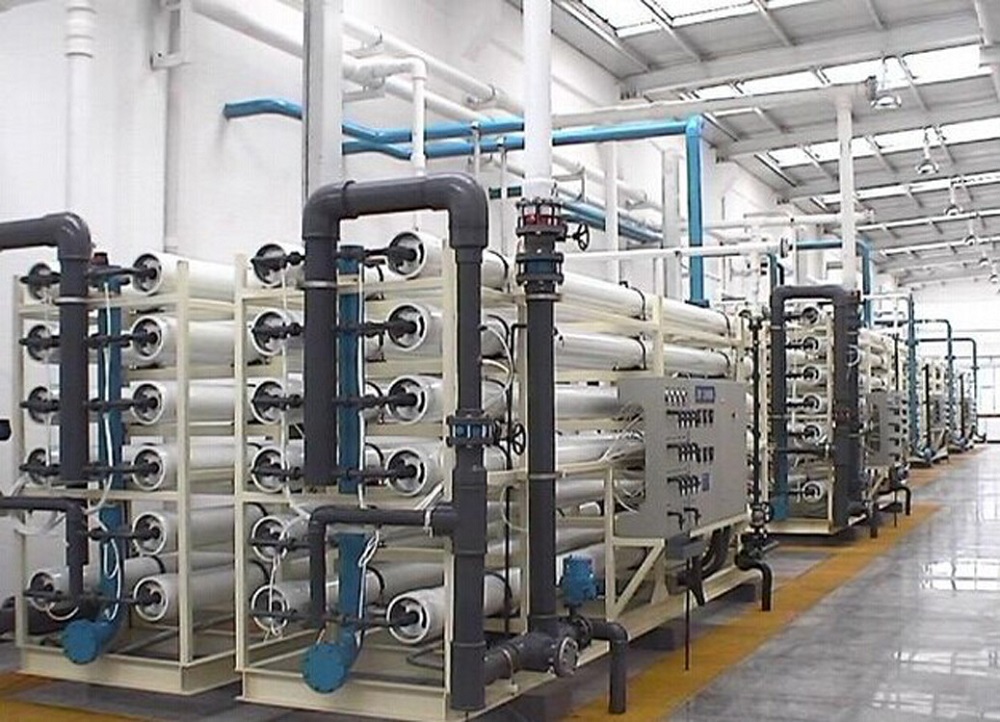
Seawater desalination membrane is generally made of polymer materials such as polyether ester (PE) or polyether ether ketone (PEEK), which has the characteristics of high salt impedance, high flux and corrosion resistance. The structure of the membrane is usually a thin porous membrane, which separates salts and impurities through micropores in the membrane. The pore size of the desalination membrane is generally between 0.1-0.0001 micron, which can effectively prevent the passage of salts and other solutes, so that fresh water can pass through and achieve the purpose of seawater desalination.
Desalination membrane plays a key role in desalination engineering. It has the advantages of high efficiency, energy saving and environmental protection, which can solve the problem of water shortage and provide a reliable water supply source. At present, desalination membrane technology has become one of the most widely used desalination methods in the world.
Desalination membranes have the following advantages over other desalination methods:
1. Efficient performance: Seawater desalination membrane has high salt impedance, high flux and efficient separation ability, which can effectively remove salt and impurities in seawater and obtain high-quality fresh water.
2. Energy saving: Compared with traditional desalination methods such as pyrolysis distillation, desalination membrane requires lower energy consumption. In the membrane separation process, only a certain pressure can be applied to achieve the separation of salt, without the need for high temperature and high pressure conditions, thus saving energy.
3. Environmental protection: Compared with other methods, desalination membrane does not need to use chemical agents or additives to avoid pollution to the environment. At the same time, no waste water is generated during the membrane separation process, which reduces the waste of water resources.
4. Sustainability: desalination membrane technology can be adapted to different application needs through different membrane separation methods such as reverse osmosis and nanofiltration. This flexibility makes the membrane technology suitable for all sizes of desalination projects, from small desalination units to large desalination plants, enabling sustainable water supply.
5. Economy: Although the initial investment of seawater desalination membrane is high, its cost is gradually reduced with the development of technology and the improvement of scale effect. At the same time, due to the high efficiency and low energy consumption characteristics of seawater desalination membrane, operation and maintenance costs can be reduced and economic benefits can be improved.
The service life of the desalination membrane depends on a variety of factors, including the quality of the membrane material, the use conditions of the membrane, operation and maintenance. In general, the design life of desalination membranes is usually between 5 and 10 years.
The following are some of the key factors that affect the service life of desalination membranes:
1. Membrane material quality: The quality and stability of the membrane material have an important impact on the service life of the membrane. High-quality membrane materials have high salt resistance and corrosion resistance, and can maintain stable separation performance in long-term use.
2. Operating conditions: Operating conditions also have a great impact on the service life of the membrane. Including water quality, temperature, pressure and other factors. Excessive temperature, pressure, or chemicals in water quality may cause the membrane material to age, crack, or clog, thereby shortening the service life of the membrane.
3. Maintenance: Regular membrane cleaning and maintenance is essential to extend the service life of the membrane. Regular cleaning can remove contaminants and salts from the surface of the film, maintaining the flux and performance of the film. At the same time, regular maintenance can also detect and deal with damage or failure of the membrane in time to avoid further damage.
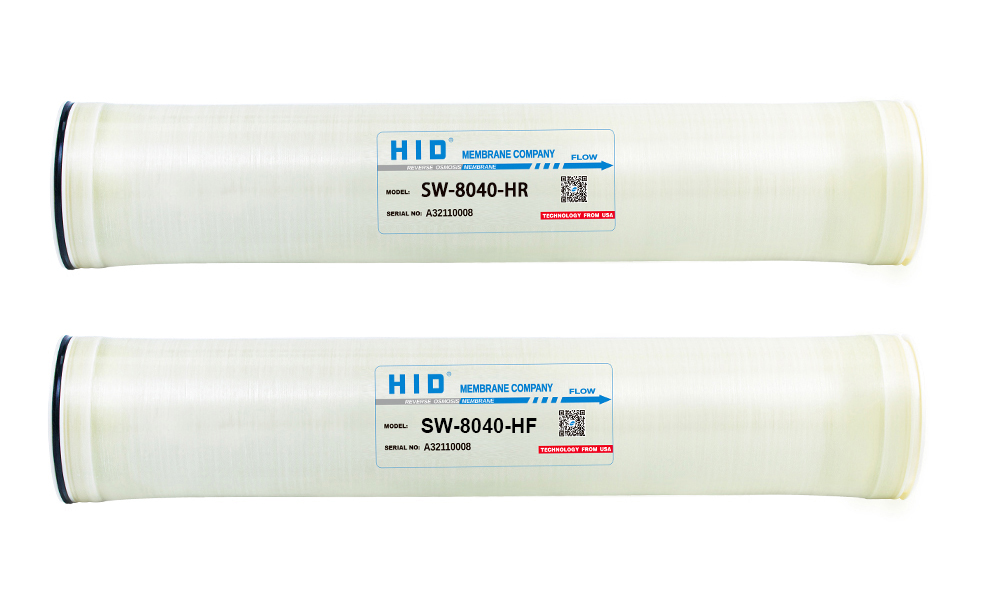
HID™ Sea Water RO Membrane (SW-8040-HR & SW-8040-HF)